
Floors That Start With a True Base
Flooring installation in Salem, Albany, and the greater Oregon area for homes where subfloor settling shows through finished surfaces
Solid Line Remodeling Incorporated installs flooring in Salem, Albany, and the greater Oregon area and begins every project the same way: checking the subfloor before a single plank or tile goes down. Homes that have settled over decades show every high and low spot through the finished surface, no matter how good the material is. Subfloor leveling is included in the work on older homes where the base is not true, so the floor that goes in sits on something that will hold it correctly.
The crew checks for high spots, low spots, and loose boards first, then corrects them before any flooring material is installed. This sequencing matters because adhesive, click-lock, and nail-down products all behave differently on an uneven base, and none of them perform the way they should over a subfloor that flexes or dips. On older homes in the Salem, Albany, and the greater Oregon area, where subfloors have had decades to settle, this step is often what separates a floor that stays flat from one that creaks, lifts, or gaps within a year.
Request a written estimate that states whether subfloor repair is included, since that single line item is the variable most likely to change between bids.
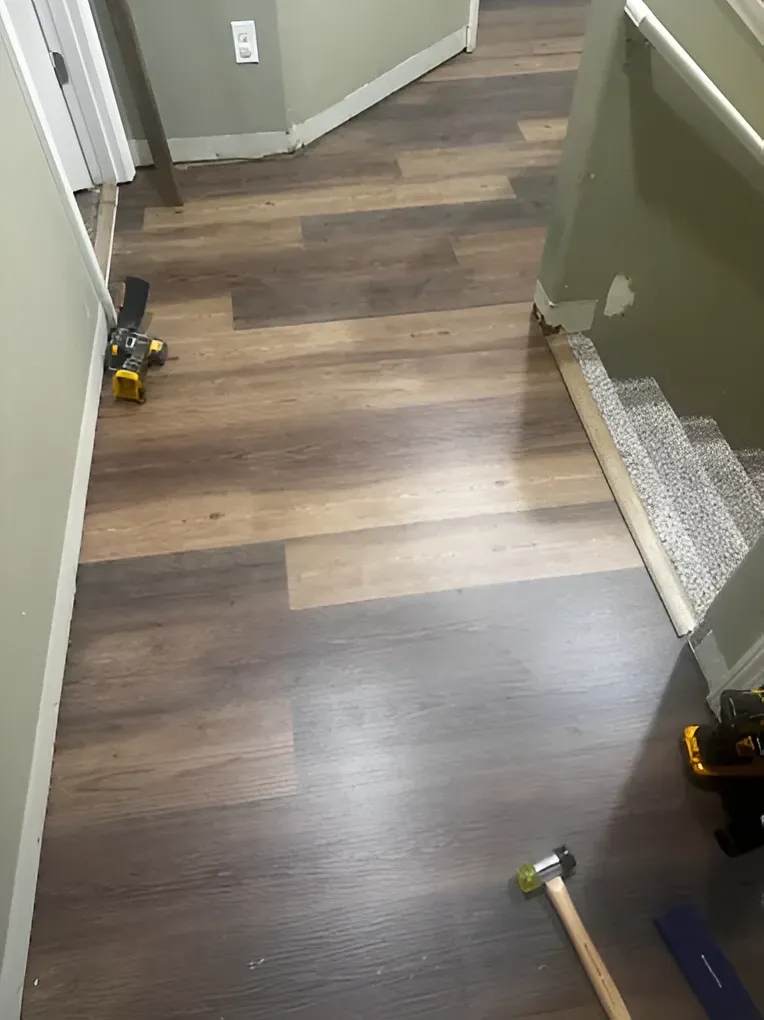
What Proper Flooring Installation Actually Requires
After the subfloor is confirmed level and all loose boards are secured, material selection determines the installation method. Hardwood, engineered, luxury vinyl plank, and tile each require different fastening, adhesive, or setting approaches, and the subfloor condition affects which products are appropriate choices for a given space. A plank product that performs well over a stable, newer subfloor may not be the right call over a subfloor that required significant correction.
Once the floor is installed, the visible result is a surface that lays flat, does not rock underfoot, and holds its seams and joints without gaps at transitions or thresholds. Doors that previously swung freely over a thicker base may need to be trimmed, and base molding and transitions are fitted as part of the finished work. These details are what distinguish a complete installation from one where finishing steps are left for the homeowner.
Solid Line Remodeling Incorporated is licensed, insured, and bonded, with 25 years of hands-on experience in the trade. When reviewing any flooring quote, confirm whether subfloor correction, transitions, and base molding are included or itemized separately, because those elements affect both the final look and the long-term performance of the floor.
What Property Owners Ask About the Work
The questions below address how flooring installation actually gets done, including what happens before any material goes down and what to check when the work is finished.
What does subfloor leveling involve, and why does it matter before installation?
Leveling means filling low spots with floor-leveling compound, planing or shimming high spots, and refastening loose boards so the surface does not flex. Without this step, finished flooring over an uneven base will show movement at seams, develop hollow spots under rigid materials, and wear unevenly at high points.
How does the installer determine which flooring product is appropriate for a given room?
The subfloor material, moisture conditions in the space, and the amount of foot traffic the room receives all factor into the decision. Concrete subfloors, for example, require products rated for below-grade or on-grade installation, while wood subfloors open up a wider range of options.
What should you check when a flooring installation is finished?
Walk the entire floor and press lightly in multiple spots to confirm there are no hollow sections under rigid flooring. Check that transitions at doorways and room edges are fully seated, that no seams have visible gaps, and that base molding sits flush against both the wall and the floor surface.
How do the older homes in the greater Oregon area affect a flooring installation?
Many homes in Salem, Albany, and the greater Oregon area were built with subfloors that have shifted or sagged over decades of settling, which means the base requires more preparation than a newer home typically does. The correction work is done before material installation so the finished floor does not replicate the unevenness below it.
Why does the sequence of subfloor correction before material installation matter?
Installing flooring over an uncorrected subfloor transfers every imperfection to the finished surface. Adhesive products will not bond evenly over low spots, click-lock products will develop gaps at joints under flex, and tile will crack at grout lines if the base moves beneath it.
Solid Line Remodeling Incorporated also
installs flooring in Salem, Albany, Stayton, Sweet Home, and Corvallis. To get an accurate picture of what your specific floor requires, arrange an on-site review so subfloor conditions can be assessed before any materials are selected or quoted.