
Fences Built to Follow the Lot, Not a Standard Plan
Fence installation in Salem, Albany, and the greater Oregon area for hillside and rural properties where grade changes make a uniform panel layout unworkable
Hillside and rural lots around Salem, Albany, and the greater Oregon area present a specific problem for fence installation: a standard panel layout set at uniform height assumes relatively flat ground, and when the grade drops or rises along the property line, that assumption breaks down quickly. Posts either end up at different heights above grade, or panels produce stair-step gaps at the bottom that defeat the purpose of the fence. Solid Line Remodeling Incorporated installs fences in Jefferson built to the actual terrain of the lot, with post depth, panel angle, and gate placement determined by the specific grade changes along the property boundary rather than by a fixed template.
The process starts with a survey of the property line and grade before any material is ordered or a post layout is drawn. Posts are set to a depth suited to the load conditions of the site, with longer posts used where the grade drops steeply and the panel has to be raked to follow the slope rather than stair-stepped. Rails and panels are cut and installed to track the grade, and gates are hung on the final post layout so they swing clear of the ground at all points across the arc. The site walk comes before the quote, which means the price reflects what the actual terrain requires rather than what a flat-lot estimate assumes.
Schedule a property walk with Solid Line Remodeling Incorporated to map the grade changes along your fence line before the post layout and panel approach are determined.
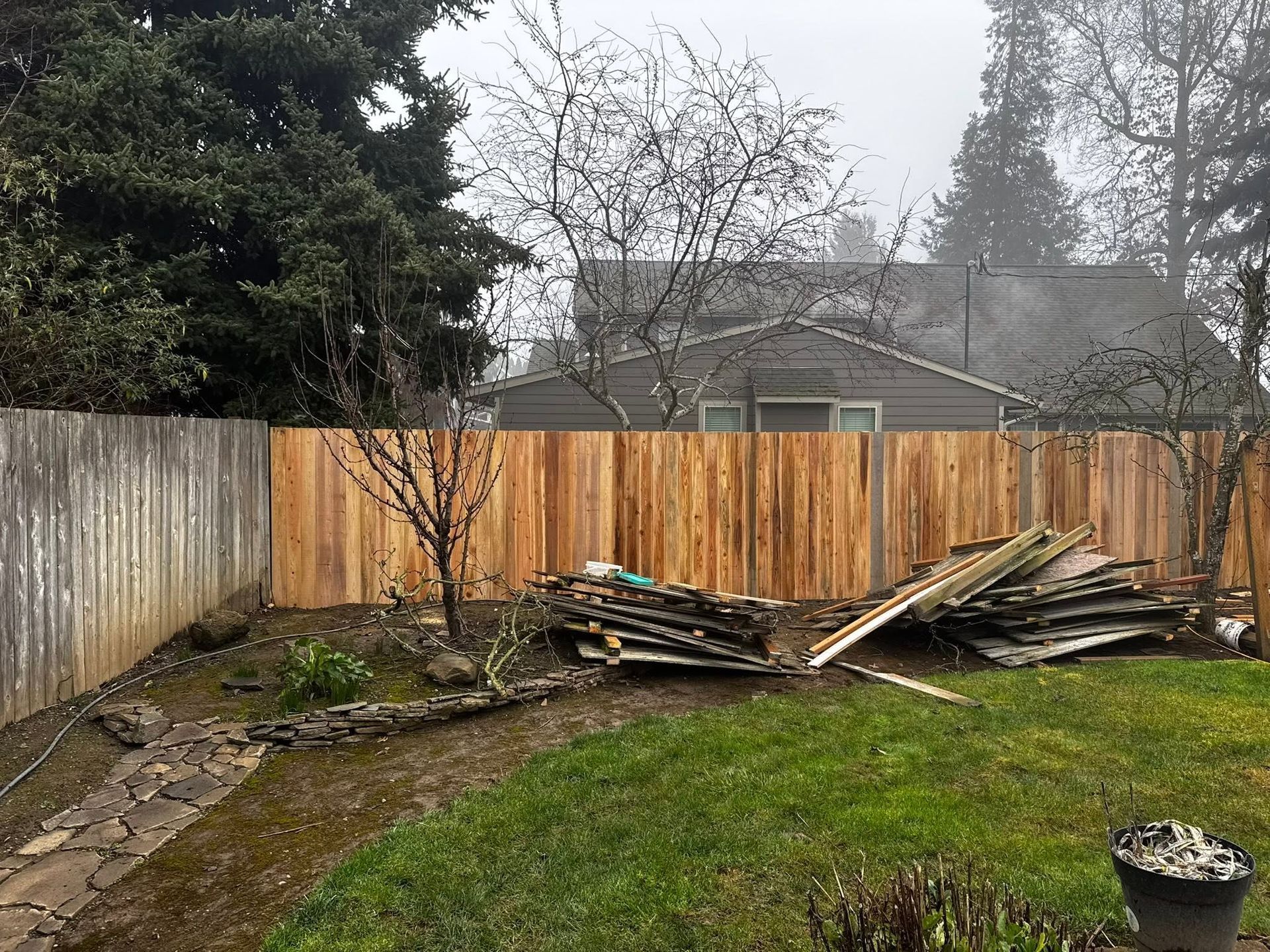
What Sloped and Rural Fence Installation Actually Involves
Setting posts on a sloped property requires more than adjusting the post height above grade. The hole depth has to account for the lateral force that wind and panel weight apply to a post that is carrying a raked rail rather than a level one, since the load path changes when panels are angled. In rural lots around Stayton and Corvallis where long fence runs cross grade changes of several feet, post depth and concrete footing volume are calculated for each section of the run rather than applied uniformly across the project. This matters most at corners and gate posts, which carry disproportionate load and need to be set to a depth that holds them plumb under tension from the adjoining runs.
After a correctly installed fence is complete, the bottom rail follows the grade without leaving large gaps between the panel and the ground, the top line of the fence has a consistent relationship to the slope rather than a stair-step profile that tracks the grade unevenly, and gates open and close without dragging at any point in their swing. These are the visible indicators that the post layout and panel angles were set from the actual grade rather than assumed from a flat-lot plan.
Solid Line Remodeling Incorporated is licensed, insured, and bonded, with 25 years of experience in fencing and related outdoor structure work. Fence projects are scoped on site so the estimate covers the terrain as it exists, including any sections of the property line that cross significant grade change.
What Property Owners Ask About the Work
Fence questions on rural and hillside properties in the Salem, Albany, and the greater Oregon area typically come down to how slope affects post setting and panel layout, and what the finished fence should look like across uneven ground. The following covers the most common decision points.
How is post depth determined on a sloped rural lot?
Post depth is calculated based on the height of the fence above grade at each post location and the lateral load the panel and wind will apply at that point—longer posts set deeper are used where panels are raked steeply or where corner and gate posts carry tension from multiple directions.
What is the difference between raking and stepping panels on a slope?
Raking cuts the panel to follow the grade at an angle so the bottom rail tracks the ground consistently, while stepping drops the panel in sections at uniform height, leaving a triangular gap at the bottom in each section—the right choice depends on the degree of slope and the fence style.
How are gate posts set differently from line posts?
Gate posts are typically set deeper and in larger concrete footings than line posts because they carry the weight of the gate in addition to the lateral load from the adjoining fence run, and any movement in a gate post shows up immediately as a gate that drags or fails to latch.
Why does the site walk come before the quote on hillside properties in Jefferson?
Grade changes that look moderate from a distance often involve multiple direction changes along the property line, and the post count, hole depths, and panel cuts required to follow that terrain cannot be estimated accurately without walking the actual line.
What does a correctly finished fence look like on a property with significant grade change?
The bottom rail maintains a consistent clearance above the ground across the full run, the top line of the fence follows the slope in a smooth rake rather than an irregular step, and gates operate without adjustment after installation because the post layout was set from the actual grade.
Solid Line Remodeling Incorporated also
installs fences in Corvallis, Albany, Stayton, Sweet Home, and Salem. To get a quote that reflects the real terrain of your property, arrange a site walk so post depth, panel layout, and gate placement are determined from the ground you actually have.